Expedition log · SCERD
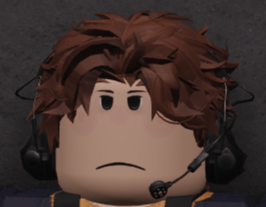
OC #6 by matt2
Haru "EYES IN THE SKY" Yamato
Human
- Nationality
- Undisclosed
- Age
- ██
- Gender
- Male
Personal background
- Personality
Bubbly, excited 24/7, may be a tid bit unhinged but in a good way.
- Favourite hobby / skill
- Playing the Banjo!!!
- Facts about them
- Doesn't know how to tie his own shoes.
- Absolutely traumatized but copes.
- Enjoys jazz music
- Sometimes moves and listens to king von.
- Backstory
He was born in the slums, to the parents of none.
That was how the district told it, anyway, and the district was the only one who ever told it. No woman had claimed him. No man had come looking. He had simply been there one morning in the storm drain behind the scrapyard, a bundle that cried, and the district had done what it always did with things left out overnight: it had let him become part of itself.
His days did not change much after that. He woke where he had fallen asleep, usually under the concrete overhang of the old flood wall, where the wind came in weaker and the floodlights from the checkpoint did not reach. He checked his pockets, found them empty, and went looking. Looking meant the market skips first, where the vendors dumped what had turned, and then the kitchen vents behind the noodle bars nearer the canal, where a boy who was quick and small could be gone before the cook turned round. On the good days there was bread. On the better days there was somebody slower than him with a wallet in a back pocket, or a phone left face-down on a table.
He did not think of it as stealing. Stealing was a word that belonged to people who had something to be stolen from. He thought of it as the same thing the rats did, and the rats seemed to be doing fine.
The winter of his tenth year, or his ninth, or his eleventh, because nobody had ever entered the number into a system, was a hard one. The cold came early and stayed. The canal iced at its edges, the vendors stopped setting up, and the noodle bars put padlocks on their vents because too many children had the same idea he did. Twice that winter he woke and could not feel his feet. Once he woke and found the boy who had been sleeping beside him under the flood wall was not going to wake at all.
The district let that one become part of itself too.
So on the 22nd of Fabuelra, when the ground had only just begun to thaw and the mud was the colour of rust, he was not in a strong position to argue. He had seen the convoy come in. Everyone had. It was the wrong shape for the district: two white vans and an armoured truck, too clean, too square, with the winged emblem on their doors and two women at the front in grey field jackets with the same wings stitched on the shoulder. Behind the vans walked men in body armour who did not look like they were from an orphanage, whatever the women said.
He ran, because running was what you did. He got as far as the scrapyard fence before a hand closed on the back of his collar and lifted him clean off the mud.
He bit. He kicked. He got one of the men across the shin hard enough to draw a curse, and for a moment he thought he might get free. Then one of the women in grey crouched down in front of him, level with his face, radio crackling on her chest, and said something he did not understand at the time and would not understand for years. She said: We are not here to hurt you. We are here because someone has to be.
Then she nodded to the man holding him, and he was carried to the van like a sack of rice, and the district watched him go the way it watched everything, and did nothing.The orphanage stood in the district itself, which surprised him. He had expected to be driven somewhere else, somewhere past the checkpoint. Instead the van stopped four streets from the flood wall, outside a building he had walked past a hundred times and never once looked at: a long, low block of prefab units behind a chain-link fence, windows shuttered on the street side, a camera over the gate, and the winged emblem on the steel roller door, so faded he had taken it for a stain.
Inside, it was warm. That was the first thing, and for a long time it was the only thing. He spent his first week there the way an animal spends its first week in a cage, watching the doors, counting the exits, eating only when no one was looking and hiding half of it under the mattress. The women in grey found the bread, every time, and every time they put it back on his tray without a word.
He tried the door on the third night. It was locked, and a light above it blinked when he touched the handle. On the ninth night one of the women, the one who had crouched in front of him at the fence, sat down on the end of his bed and told him he could stop. Nobody was going to sell him. Nobody was going to send him back. Until then there would be food, and there would be classes, and he would be given a bed with his name on it.
He told her he did not have a name.
She said that was fine. They would give him one of those too.
He was there three years. He grew. He stopped hiding bread. He learned to read badly and to count well, because numbers were useful and words were not, and the woman from the fence told him that was the most district thing she had ever heard and laughed when she said it. He learned that the winged emblem meant something to people outside, something large, though nobody in the building could tell him exactly what. The older children said it was a hospital company. The women said it was older than that.
Then the man came.He came in late Decelsta, when the building was cold even with the heaters running, alone, in a black sedan with no plates, in a long dark coat that was cut like a uniform but carried no insignia on it anywhere. He was tall and grey at the temples and his face looked as though it had been carved and then left out in weather. He did not sit. He did not take the coffee they offered. When the children were brought out to be looked at he looked at each of them for exactly as long as it took to see them and not a moment more.
He stopped in front of the boy. How old are you, he said. It was not quite a question.
The boy told him he did not know.
The man looked at him a while longer. Then he turned to the women and said, This one, in the voice of a man choosing a used car, and that was the whole of it. There were forms, which the man signed on a tablet, and there was a bag, which the women packed, and there was the woman from the fence kneeling down once more to tell him that the man was hard but the man was good, and that those were not the same thing, and that he should learn the difference.
The man did not take his hand when they left. He walked ahead, and the boy followed, and that was the shape of the years that came after.
The man raised him. There was no other word for it, though neither of them would have used that one. He fed him and clothed him and put a roof over him, an apartment on the ninth floor of a block that looked out over the district from far enough away that the district looked almost like a place. He taught him, and taught him hard: to read properly, to sit still, to speak when spoken to, to strip and clean a rifle and then to shoot it, to run until he could not and then to run further. He never raised a hand to him. He never raised his voice. He also never once said the boy's name as though he liked it, and he never once said what any of it was for.
The boy stopped asking after the first year, because asking got him nothing. He learned to take facts one at a time, because that was how the man gave them. He learned the difference the woman had told him to learn, and he was not sure he liked it either.
He was still a boy when he walked into the recruitment office with the wings over the door.
The form asked for a date of birth. He had never had one. So he gave himself one, far enough back to pass, and wrote it in the box with a steady hand, and when the recruiter looked at him over the top of the screen and then looked at the number and then looked at him again, the boy looked back the way the man had taught him to look at things, and the recruiter let it go. The district had taught him how to lie. The man had taught him how to do it without blinking.
He did not tell the man. He did not need to. When he came home that night the man was standing at the window with his back to the room, and he said, without turning round, They take you Monday. And that was the whole of that conversation too.
The academy took him Monday. What they did with him there is not this story. It is enough to say that they found out quickly what the man had already made of him, and that they finished the job, and that when they were done with him they did not put him in a reserve company or a supply depot or a hospital guard rotation the way they did with the others his size. They put him on a transport. The transport went to Kastopia.They came at the dead hour, the one the squad had argued about and then stopped arguing about, because it was always the same hour and nobody ever came.
The camp was nothing. Four tents, a comms shelter, a generator, a berm of sandbags and scrap that somebody had called a perimeter with a straight face. Eleven of them, counting him. The nearest Agilon position was forty minutes away by road and the road was mined, and the KMG held the ridgeline to the north, and everybody knew it, and that was supposed to be fine because the KMG never came down off the ridge.
He was on second watch. He was always on second watch, because he never complained about it and the others had learned not to offer. He was sitting with his back to the generator housing, rifle across his knees, listening to the wind push at the tarpaulins, when the generator stopped.
Not coughed. Stopped. The lights died and the comms shelter went dark and for one half-second the only sound in the world was the wind.
Then the berm on the north side came apart.
He did not think. That was the thing he would try to explain afterwards, to the people who asked, and could not. He had been taught to take facts one at a time, and the facts came very fast, and he took them. Fact: a charge on the berm, which meant they had crawled up to it, which meant they had been in the dark out there for an hour at least, watching him sit. Fact: muzzle flash from the gap, three sources, low, moving. Fact: the first tent was already down and somebody inside it was screaming. Fact: the squad was in its bags, in the dark, in the open, and in about ten seconds they were going to be dead.
He was already moving before the last fact landed.
He did not go toward the gap. He went sideways, along the inside of the berm, low, the way the man had made him run a thousand mornings in the stairwell of the ninth-floor block, and he came up on the first of them from the flank where the man was looking the other way, and he shot him once in the side of the head from four metres and kept moving. The second one turned toward the sound. He shot him in the throat. The third was a shape going down on one knee to fire into the second tent and he put two into the shape's back and the shape folded.
There were more. There were always more. He counted them the way he had once counted exits. Two coming through the gap behind the first three. One on the berm itself, silhouetted for exactly as long as it took. Two more out in the dark beyond, holding, waiting to see what the first wave did. The first wave was dying. He did not give the second one time to decide what that meant.
He went over the berm.
Afterwards the squad would say he had gone out into the dark alone, and they would say it with a particular look, and he would not know what to do with the look. To him there had not been a dark and an inside. There had been the camp, which was his, and the people in it, who were his, and a number of men who had come to take both. The number went down. He did not shout. He did not call out to the squad to cover him. He did not feel his heart. He moved from one of them to the next the way he had once moved from one skip to the next in the market, quick and small and gone before the cook turned round, and each time he reached one he ended it, and then he looked for the next.
The last one ran. He had seen that coming; there was always one who ran. He let him get thirty metres, because thirty metres was far enough that the man would think he had made it, and then he shot him in the back and watched him go down into the scrub and did not go to check, because he did not need to.
Then it was quiet again, and the wind came back.
He walked back to the camp. He counted them on the way, in the light of the flares the squad had finally got up: nine. Nine, and the KMG never came down off the ridge. He stepped over the one in the gap without looking at him and went to the second tent, where the screaming had stopped, and found that it had stopped because the medic had got a hand over the man's mouth and a pressure bandage on his leg and was lying on top of him in the mud, and the medic looked up at the boy and the boy looked back, and that was the first time he saw the look.
Eleven of them, counting him. Eleven in the morning, too. One of them would never walk right again and that was the worst of it.
The sergeant came and found him at dawn, sitting with his back to the dead generator, cleaning his rifle. The sergeant stood over him for a while. He was a decent man, the sergeant, and he had been at this a long time, and he had seen people after their first real night, and he knew what they were supposed to look like. He looked at the boy for a long time, the way the man in the black coat had once looked at him in the hall of the orphanage, for exactly as long as it took to see him.
How old are you, the sergeant said at last. It was not quite a question.
The boy gave him the date he had written in the box. He did not blink.
IV. Compass, Lantern, Star
They made him a hero. It happened fast, and it happened to somebody else.
The report went up the chain the same morning, and the chain was in a mood to hear it. Nine KMG dead in a forward camp that had been written off before the flares were up, eleven Agilon personnel alive, and a single rifleman of no recorded age who had gone over the berm on his own. By the time the transport came for the wounded there was already a name for the night, and by the time the squad was pulled back to the rear there was a name for him, and it was not the one the women in grey had given him.
There was a ceremony. There were several, in the end, because the first one was for the division and the second was for the press and the third was in Patriam itself, under a ceiling so high he could not see the top of it, with the winged emblem on a banner the size of the apartment he had grown up in. He stood where he was told. Things were pinned to his chest. People he had never met shook his hand and said words to him, and he said the words back that he had been taught to say, and his face did what the man in the black coat had taught it to do, which was nothing.
He kept waiting to feel it. He had seen other men get their ribbons. He had seen what it did to them, the way they stood afterwards, the way they touched the thing on their chest when they thought no one was looking. He touched his. It was metal. It was cold. He took it off at night and put it in the drawer with the others, and in the morning it was still just metal.
The strangest part was the news. He saw himself on a screen in a canteen once, or a version of himself, filmed from behind at the second ceremony, and the voice over the footage said a name and told a story and neither of them was quite his. A week later the footage was gone. The story was gone. When he searched for it there was a camp, and a raid, and eleven survivors, and no rifleman at all. Somebody with a desk and a clearance had reached into the record and taken him out of it, carefully, the way you lift a splinter. He understood later that this was what they did for the ones they meant to keep. At the time it only confirmed what he had suspected since the first ribbon: that the hero was a thing that had been built around him, and could be taken down just as easily, and that whatever was left standing when they took it down was all he had ever been.
The squad looked at him differently. Not worse. He could have handled worse. They looked at him the way you look at a dog that has done something very useful and very frightening, and they were kind to him, and they did not sit near him at meals.
The sergeant came to him one evening with a form on a tablet and did not sit down either. There was a selection, he said. It ran once a year. It was open to anyone, squires included, and it was the worst thing the sergeant had ever heard of, and the sergeant had not done it and would not, and he thought the boy should. He did not say why. He did not need to. He had been looking at the boy for a month the way the man had once looked at him in the hall, and he had reached the same conclusion, and this was him saying This one.
The boy signed. His hand was steady. The date in the box was the one he had chosen for himself.
What the Cardinal did to him is not this story either. It is enough to say that it lasted into a second season, that he went in with more than a hundred and came out with fewer than ten, that some of the ones who did not come out had been better than him at everything except the one thing that mattered, which was continuing. He crossed country with no map and no light and only the stars the man had never once pointed out to him and that he had learned anyway, alone, on the roof of the ninth-floor block. He went into the dark and came out of it. He went south onto water that did things water should not do, and he came back from that, and he did not talk about it. He went north and down into a place where something very old and very large was waiting, and he killed it, and he brought back the proof, and he did not talk about that either. He took the facts one at a time. That was all it was. That was all it had ever been.
The badge was given to him in a room with a stone floor, by someone whose name he was not told and did not ask. There was no press. There were nine others in the room and none of them were the people he had started with. He knelt because he was told to, and something was said over him in a language that was not quite the one everybody spoke, and then a hand pinned the thing to him and stepped back.
A compass. A lantern. A star.
He looked at it for a long time afterwards, alone, the way he had looked at the ribbons. He waited for it to be metal. It was metal. But there was a line under the star, cut small, and he read it, and for the first time in his life he finished the sentence.
The light that touched you once still travels outward, forever.
He thought about the woman in the grey jacket crouched in the mud at the scrapyard fence, saying something he had not understood. He thought about the man at the window with his back to the room. He did not know what he felt. He noticed, for the first time, that he was feeling something.
His orders came the next morning on a tablet. A squad. A sector. He read the number twice.Sector-12. Kastopia. The walled one. The one the older children in the orphanage had told stories about after lights-out, the one the sergeant had gone quiet about when somebody asked, the one that the posters in the recruitment office had carefully not shown.
He put the badge on. He put the tablet under his arm. He went to find his transport, because whatever else was or was not real, the transport always was.
Character appearance
- Skin colour
- White
- Hair
- Ginger
- Facial hair
- N/A
- Height
- 5'6
- Weight
- 97.5 kg
- Physique / build
- Lean, thin build, with a sleeper build type shiiit..
- Body modifications
N/A
Extras 0 threads · 0 pictures
Gallery
No pictures yet.
Threads
No threads yet.